
How to build a course funnel that converts
 Jaro Suranyi
Your course funnel right now is probably a single PDF, sitting unopened in a few hundred inboxes.
You called it a lead magnet. It traded well for emails, then went quiet.
That isn't a funnel. It's a collection box.
A course funnel is the path that carries a stranger from first click to paying student, through six stages: attract, give free value, nurture, offer, deliver, and ascend. The move that makes it convert is a short free course at the top instead of a static download, because a finished course shows you who is actually ready to buy. A PDF collects emails. A course funnel qualifies buyers.
You do not need a big audience for this to work. You need a path.
What is a course funnel, really?
A sales funnel is the generic version: ad, opt-in, email sequence, checkout. A course funnel is that same shape with a teaching experience doing the persuading in the middle, where a landing page and three emails usually try and fail.
The difference is what happens between the click and the sale.
In a plain funnel, a cold prospect has to decide they trust you from copy alone. In a course funnel, they learn a slice of your method first, watch it produce a small result, and arrive at the offer already convinced. You are not selling to a stranger anymore. You are inviting someone who has seen the work. The teaching is the selling.
That is the whole reframe. Most funnels try to shorten the distance to the sale. A course funnel earns the sale by giving value before asking for anything.
It also changes what you measure. A plain funnel watches opt-in rate and cart abandonment. A course funnel watches completion, because completion is the number that predicts who buys. Track the wrong metric and you optimize the top of the funnel while the bottom stays empty.
What are the six stages of a course funnel?
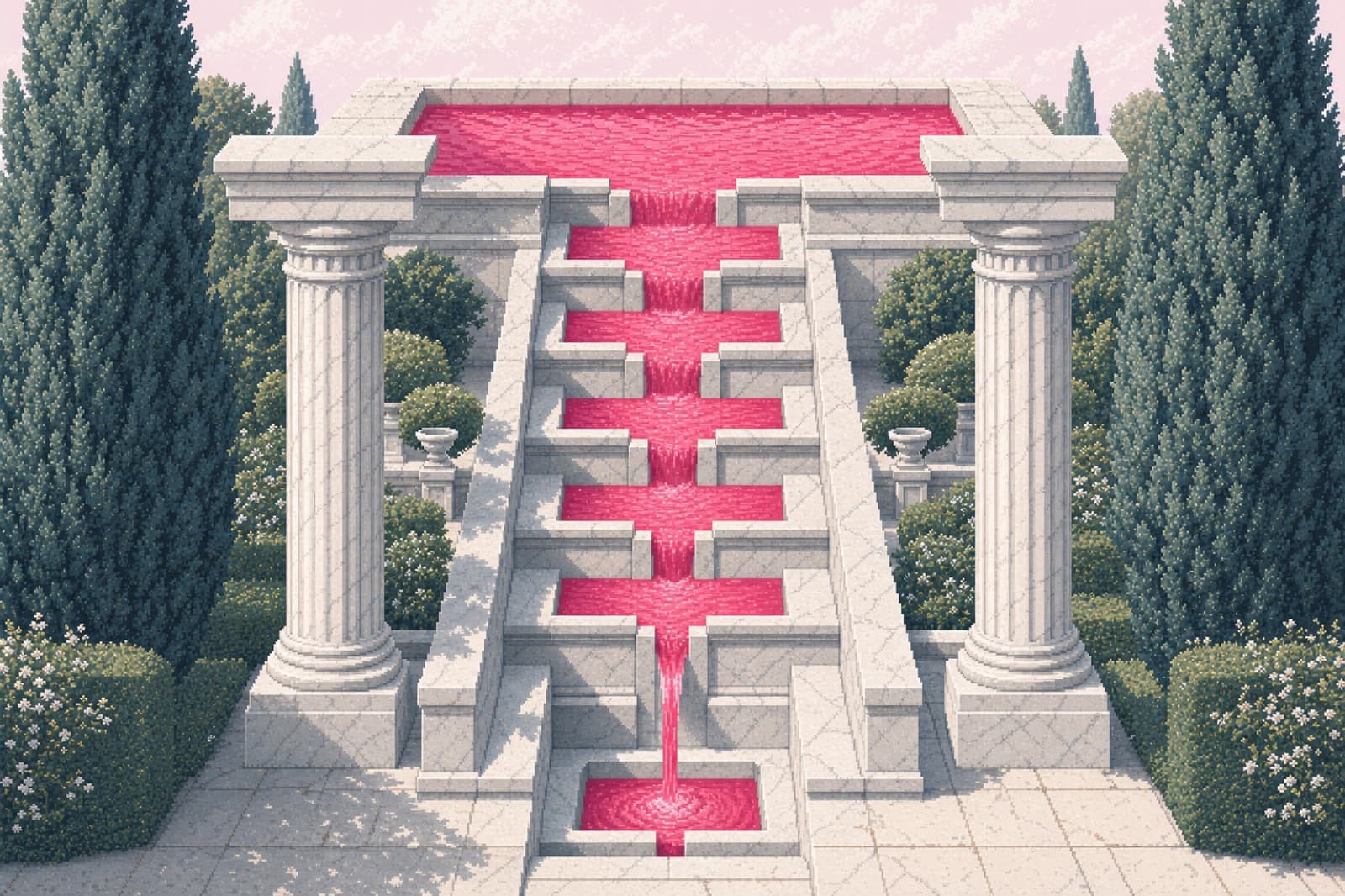
Picture it as a shape that narrows. Many strangers land at the top, fewer become students at the base, and every stage exists to move the right people down and let the wrong ones drift out.

The course funnel
The stages are nothing fancy at all, just the same six every time, and the free course sits inside the first two.
The six stages
- Attract. A post, a search result, a referral, an ad. One job: get the right stranger to raise a hand and opt in. Keep the promise narrow and true.
- Give free value. The short free course. Not a PDF, a real teaching experience that produces one small win. This is where trust gets built and intent gets measured.
- Nurture. A light email sequence beside the course that answers objections and keeps people moving to the end. Three to five emails, not thirty.
- Offer. When someone finishes, you invite them to the paid next step while their momentum is highest. They just got a result, so the natural question is what comes next.
- Deliver. The paid course or program does what your name promised. Delivery is marketing for the next sale, so this stage feeds the last one.
- Ascend. A finisher who got the result is your best prospect for the higher tier: a cohort, a mastermind, a service. The funnel does not end at the first sale.
Most course sellers build stage four and skip the rest. That is why their funnel is a checkout page with nothing feeding it.
Why does a free course beat a static lead magnet at the top?
Because a download tells you a name, and a finished course tells you an intent.
A PDF is built to maximize one number: how many people will trade an email to grab it. High opt-in, zero signal. The person who skimmed it for ten seconds and the person ready to hire you look identical in your list. So you either spray everyone with the same sequence or burn hours chasing people who were never going to buy.
A free course changes the top of the funnel from a thing people download into an experience people move through. Finishing is the qualifying act, and the course records it for you.
The trick is that the course has to actually get finished. Self-paced courses commonly report completion below 15 percent, while structured, supported programs reach as high as 70 percent. That gap is the whole game here: a free course nobody completes qualifies nobody. Build it short, build it finishable, and the completions become your list of real buyers. We made the full case for this in the completion signal, the argument that a finished free course books more calls than a lead magnet ever could. This post is the funnel that idea lives inside.
Do you need a webinar to sell at the bottom?
No. A webinar is one option for the offer stage, not a law.
Its weakness is timing. A webinar is a single moment, and most registrants miss it. The replay goes out and rarely gets watched to the end. You did the work once and it expired the same evening.
A course funnel makes the offer to the people who finished, whenever they finish. Say a hundred people opt in and forty reach the end. You invite those forty, not the hundred, because the forty already proved they value your method. Even a modest share of a warm, self-selected forty beats a big cold room every time, and it keeps happening next week without you back on camera.
None of this means you cannot use a webinar. It means you do not have to. The offer stage is a slot, and you can fill it with a live event, a one-page sales page, or a short call. Pick the one you will actually keep doing. A brilliant webinar you run once and abandon converts worse than a plain email you send every week.
Sell to the finishers, not the whole list. That is the entire bottom of the funnel. The people who completed the free course arrive at the call or the checkout already warm, so the sale is a conversation about fit, not a pitch from zero. For the full playbook on closing a small, warm audience, read how to sell online courses.
Turn a finished free course into booked calls
See itHow do you keep a course funnel simple for a small audience?
Here is where most people drown. They read about tripwires, order bumps, and nine-email launch sequences, and they build a machine with forty moving parts for an audience of two hundred.
Do not do that.
A funnel for a small, warm audience has exactly four parts: one opt-in, one free course, one short email sequence, one paid offer. That is it. You can add the fancy stages later, once the simple version is turning finishers into buyers. Complexity is something you earn with volume, not something you install on day one.
The reason you can stay this lean is that your audience is warm. A consultant with three hundred engaged contacts does not need reach. They need a path those contacts can walk. The free course carries the trust that a cold funnel spends thousands in ads trying to buy, so you convert a small list at a rate a big cold list never touches.
And the whole thing compounds. A course funnel is an asset that grows, not a launch that ends. The free course keeps qualifying leads while you sleep, the paid course keeps delivering, and the finished library sits under all of it, ready to sell again. That standing, self-qualifying system is what we mean by a self-running academy: the same course library that sells is also the lead magnet that fills the top.
The reframe
Stop thinking of your lead magnet as the finish line. It is the first stage of a path, and a static PDF is a path that dead-ends at an unopened inbox.
Build the six stages instead. Attract the right stranger, teach them for free until the value is obvious, nurture the ones who engage, invite the ones who finish, deliver on the promise, and open the door to the next tier. Keep it to four parts while your audience is small, and let it grow as the audience does.
The course does the selling. You just have to build the path.
Go build the path.
Frequently asked questions
- What is a course funnel?
- A course funnel is the path a person travels from stranger to paying student: attract, give free value, nurture, offer, deliver, and ascend. It is a sales funnel where a teaching experience does the persuading. Instead of pushing a cold prospect toward a checkout, you let them learn a piece of your method for free, prove it works, and self-select as a buyer. The course carries the trust that a landing page cannot, so the sale at the bottom is a short step rather than a cold pitch.
- How do you build a sales funnel for an online course?
- Start at the bottom and work up. Name the paid outcome you sell, then design a short free course that gives a real taste of that outcome. Put a simple opt-in in front of it, a light email sequence beside it to keep people moving, and an invitation to the paid offer at the end for the people who finish. That is the whole build: one entry point, one free teaching experience, one clear next step. Skip the webinar, the tripwire maze, and the ten-email launch until the simple version is converting.
- What is the difference between a lead magnet and a funnel?
- A lead magnet is one asset. A funnel is the whole path. The lead magnet is the thing you trade for an email, a PDF, a checklist, or a free course. The funnel is everything that happens after: the nurture, the offer, the sale, and the ascension into higher-value products. A lead magnet with no funnel behind it just fills a list with names. A funnel with a weak lead magnet at the top has nothing to qualify the people entering it. You need both, and the strongest lead magnet is a course that people finish.
- Do you need a webinar to sell a course?
- No. A webinar is one common top or middle of a course funnel, not a requirement. Its weakness is that it is a single moment most registrants miss, and the replay rarely gets watched to the end. A short free course does the same persuading at the prospect's own pace and keeps working long after a live event has passed. If webinars fit your style and audience, run them. If they do not, a finishable free course sells just as well without you standing on camera at a fixed hour.
Keep reading
How to price an online course
How to price an online course: set the price on the value of the outcome, not the hours of video or what it cost you to build. A result worth thousands can carry a price in the hundreds, and a higher price to a warm few beats a low price to strangers. The logic and the math.
 Viktor Kacenak
The online course outline template (steal this)
An online course outline template you can copy right now: one outcome, three to six modules, short single-idea lessons, and one action per lesson. Fill in the blanks instead of staring at an empty editor, and start from a skeleton that is already built for completion.
 Tomas Placko
Course curriculum design: how to turn what you know into a path
Course curriculum design is the work of turning what you know into a path a student can walk: one outcome, the ordered steps that reach it, grouped into modules, with everything else cut. Here is how to design the path from your own expertise, and where design ends and structure begins.
 Jaro Suranyi
The thinking behind the future of online academies.
The ideas, the numbers, and what owners are launching with it. One email a month. No noise.